Himeji Castle is so white, with roofs spread like wings, that people call it the White Heron Castle. When a white feather drifts down, Hana is sure the castle has lost one, and she sets off to take it all the way to the top: through twisty gates, past an old woman's millstone and up stairs as steep as a ladder.
Hana and her grandfather walk under the cherry trees to Himeji Castle, called the White Heron Castle because its roofs spread like wings. When a white feather drifts down, Hana decides to carry it all the way to the top. Climbing twisting paths and steep stairs, she learns why the path winds, hears the story of an old woman’s millstone in the wall, and finds that “small steps still go up.” At the top a real heron glides past, and Hana lets the feather fly home.
What children can explore
A real landmark: Himeji Castle in Japan, about 400 years old
Why the castle path twists, and the legend of the millstone
Small steps and small gifts still make a difference
Talk about it after reading
Why is it called the White Heron Castle?
The old woman gave just one stone. How did her small gift help?
Hana’s legs got tired on the stairs. What helped her keep going?
Read, listen and explore
Follow the narration as each word lights up, or turn off the narrator and read at your own pace. Touch the pop-up scenes to see the characters and objects react. Switch the reading language from the language menu in the reader.
With a free parent account, you can save reading progress, add children’s profiles, collect achievement pins and enjoy the story quizzes.
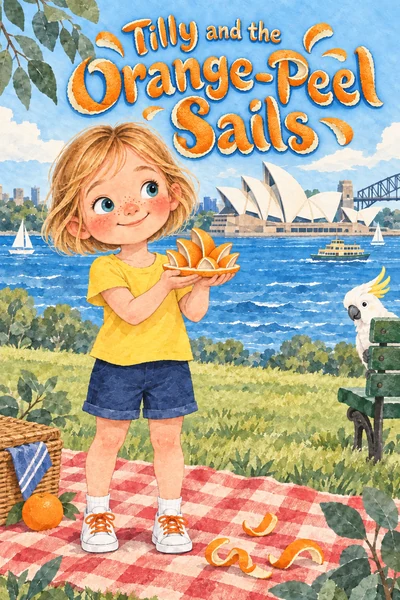
Tilly thinks the white sails across the harbour are boats. They are the roof of the Sydney Opera House, and nobody knew how to build it until someone saw that every curve came from one round ball. With an orange, a cheeky cockatoo and a picnic blanket, Tilly works it out too.
Lina promises a song for the neighborhood picnic. Join her and Grandpa in Paris, listen to a bell, the river and a bird, and help her find a little tune to share.